We’ve all had that moment during a text conversation when someone shares a little too much information. Maybe they start talking about an embarrassing medical issue, describe something overly personal, or reveal details nobody really asked for.
Instead of typing a long response, many people simply reply with “TMI!”
If you’ve ever wondered about the TMI meaning in text, you’re in the right place. This popular internet slang has been around for years and is still widely used in messages, social media posts, group chats, and online conversations.
In this guide, you’ll learn exactly what TMI means, where it came from, how to use it correctly, when to avoid it, and plenty of real-life examples.
Whether you’re new to texting slang or simply want to communicate more naturally, this article will help you understand everything you need to know.
What Does TMI Mean in Text? 💬
TMI stands for:
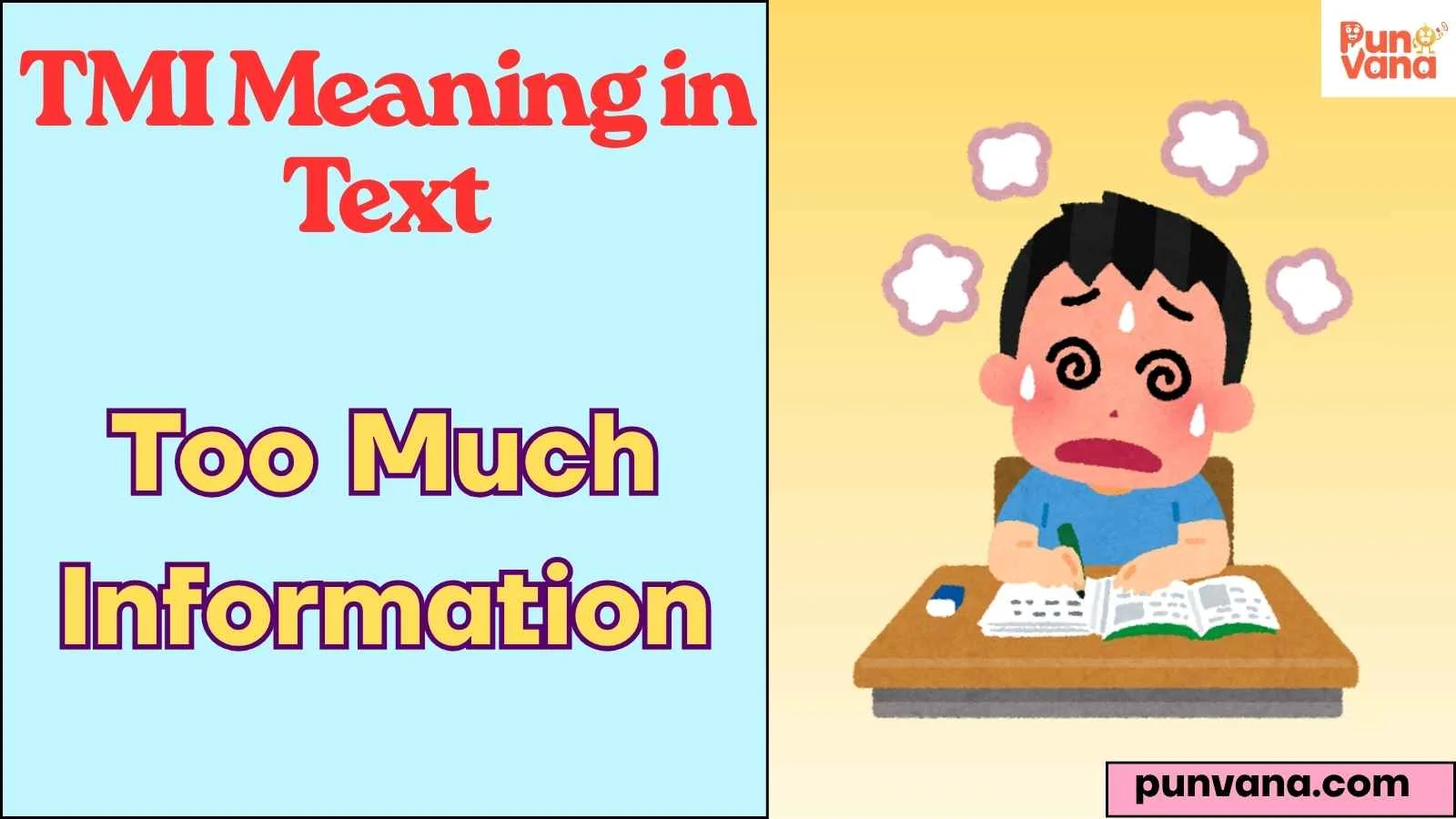
Too Much Information
People use this abbreviation when someone shares information that feels too personal, unnecessary, embarrassing, graphic, or overly detailed for the conversation.
It doesn’t always mean the information is bad. Sometimes it’s simply more detail than the listener wanted.
Quick Definition
| Term | Meaning |
|---|---|
| TMI | Too Much Information |
| Used In | Text messages, social media, chats, emails, memes |
| Tone | Funny, playful, surprised, or slightly uncomfortable |
| Common Audience | Friends, family, classmates, coworkers (informally) |
Featured Snippet Answer 📌
TMI meaning in text is “Too Much Information.” It is commonly used when someone shares personal, embarrassing, unnecessary, or overly detailed information during a conversation.
The Origin of TMI 🌍
Although TMI feels like modern internet slang, it actually became popular long before smartphones dominated everyday life.
The phrase “Too Much Information” has been used in spoken English for decades. As online chat rooms, instant messaging, and text messaging became more common, people shortened the phrase to TMI to save time.
Eventually, the abbreviation spread across:
- 📱 Text messages
- 💬 Online forums
- 😂 Memes
- 📷 Social media
- 🎮 Gaming chats
- 🎓 School conversations
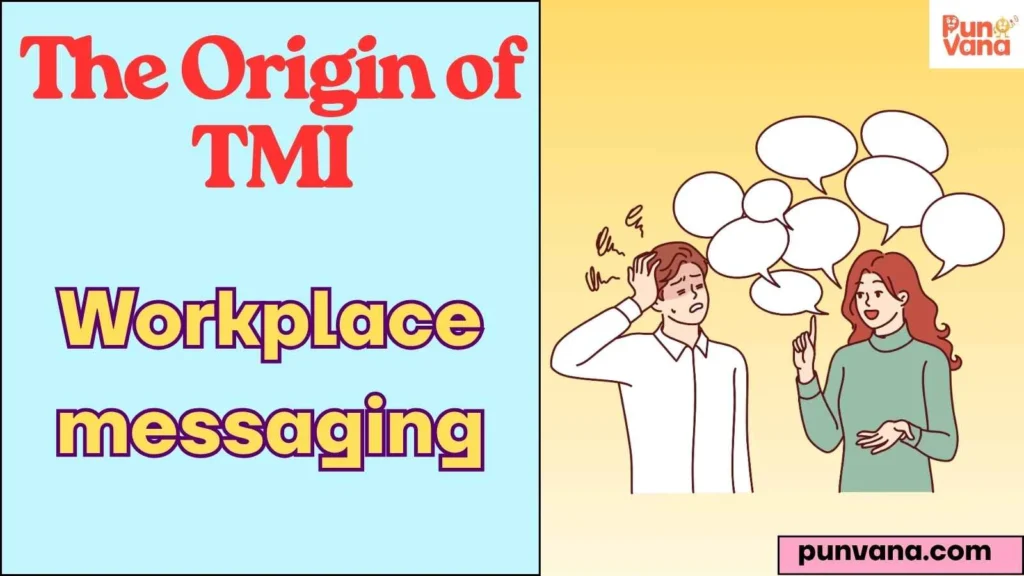
- 👨💻 Workplace messaging (informally)
Today, TMI is recognized worldwide and remains one of the most common internet abbreviations.
Why Do People Say TMI? 🤔
People don’t always use TMI to criticize someone. In many conversations, it’s simply a humorous way to say:
- “I didn’t need to know that.”
- “That’s a little personal.”
- “You’ve shared enough.”
- “Now I can’t unhear that.”
- “That’s more detail than necessary.”
Depending on the situation, TMI can be:
Funny✅
Playful✅
Friendly✅
Slightly awkward✅
A gentle way to change the subject✅
The tone depends on the relationship between the people talking.
How Is TMI Used in Text Messages? 📱
The TMI meaning in text becomes much easier to understand when you see it in everyday conversations.
Example 1
Alex: I haven’t washed my lucky socks in three weeks because they keep helping my team win.
Jordan: 😂 TMI!
Example 2
Emma: I accidentally sent my diary entry to my boss.
Sarah: OMG… TMI 😂
Example 3
Ben: My stomach has been making weird sounds all morning.
Chris: Haha… TMI.
Example 4
Lisa: I cried during three different commercials today.
Mia: That’s kind of TMI, but also adorable.
Example 5
David: I still sleep with the stuffed bear I got when I was six.
Ryan: That’s definitely TMI 😂
Notice that TMI is often followed by laughing emojis because it’s usually meant as a lighthearted response rather than an insult.
When Should You Use TMI? ✅
Knowing the TMI meaning in text is only half the story. Understanding when to use it is just as important.
Here are the most common situations.
1. Someone Shares Embarrassing Details 😅
If a friend reveals something awkward, you might jokingly reply:
“TMI 😂”
Example:
“I tripped while dancing in my kitchen and broke my favorite mug.”
2. Someone Gives Too Many Details 🤯
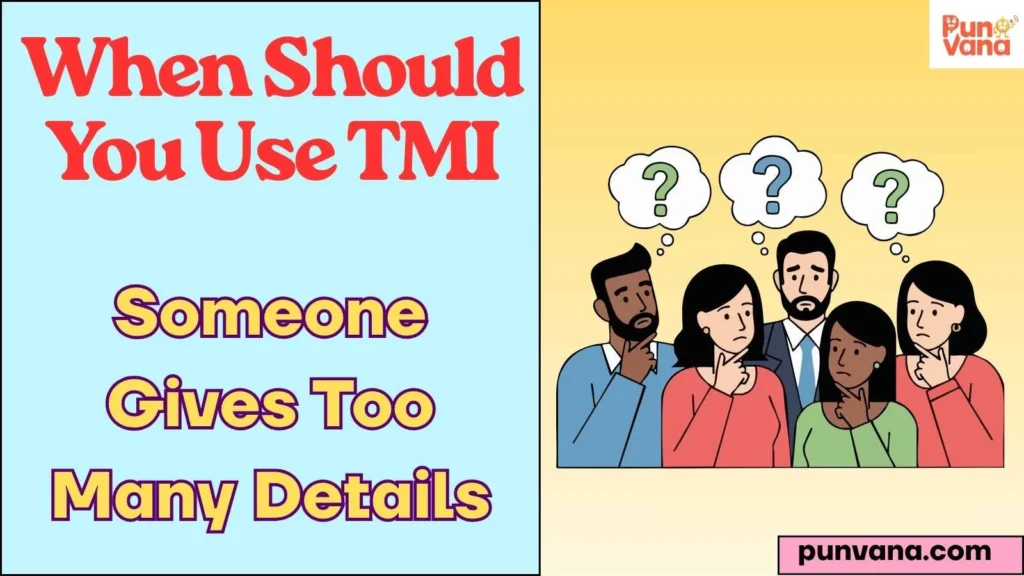
Sometimes people explain every tiny part of a story.
Example:
“I woke up at 6:14, brushed my teeth for exactly two minutes, then counted every step to the kitchen…”
Response:
“TMI 😂”
3. Oversharing Personal Information ❤️
If someone starts discussing very private topics unexpectedly, people often respond with TMI.
Example:
“I tell my cat absolutely everything about my dating life.”
Friend:
“TMI 😂”
4. Funny Storytelling 😂
Sometimes people intentionally overshare because they know it’s entertaining.
Example:
“I accidentally waved back at someone who wasn’t waving at me… then pretended to stretch.”
Friend:
“TMI 😂”
When NOT to Use TMI ❌
Although TMI is usually harmless, there are situations where it may come across as rude or insensitive.
Avoid using it when someone is sharing something serious.
Examples include:
- ❤️ Health concerns
- 😢 Family emergencies
- 💔 Personal loss
- 🧠 Mental health struggles
- 🙏 Asking for genuine advice
Instead of saying TMI, consider replying with kindness and empathy.
Better Responses
- “I’m sorry you’re going through that.”
- “Thanks for sharing.”
- “I’m here if you want to talk.”
- “That sounds difficult.”
- “I hope things get better.”
Being supportive is always more important than making a joke.
Different Meanings of TMI Based on Tone 🎭
One interesting thing about TMI is that its meaning changes depending on the conversation.
| Tone | Meaning |
|---|---|
| 😂 Funny | That’s hilarious but unnecessary. |
| 😅 Embarrassed | I didn’t really need to know that. |
| 🙈 Awkward | That’s a little too personal. |
| 😄 Friendly | You’re oversharing again! |
| 😐 Serious | Please don’t discuss that here. |
Because texting doesn’t include facial expressions or voice tone, emojis often help show whether TMI is meant playfully or seriously.
For example:
- TMI 😂 = Funny
- TMI 🤣 = Joking
- TMI 😅 = Slightly awkward
- TMI 🙈 = Embarrassing but amusing
TMI Meaning on Different Social Media Platforms 📱
One of the best things about internet slang is that it works almost everywhere. The TMI meaning in text stays the same across most apps, but the way people use it can change depending on the platform.
Let’s look at how TMI appears in everyday online conversations.
TMI Meaning on Snapchat 👻
On Snapchat, conversations are usually quick, casual, and full of humor. People often use TMI after a friend shares something unexpectedly personal.
Examples
Friend: “I forgot to brush my teeth before school today.”
You: “TMI 😂”
Friend: “I still have the birthday cake from last week in my fridge.”
You: “Haha, TMI!”
People also use TMI in Snap captions to make fun of themselves.
Example Caption
“Probably TMI… but I spilled coffee on my shirt before this selfie. ☕😂”
TMI Meaning on Instagram 📸
On Instagram, TMI often appears in:
- Story replies
- Comments
- Captions
- Reels
- DMs
Many creators intentionally share funny or embarrassing moments and label them as TMI to entertain their audience.
Examples
Caption
“TMI… I cried because my pizza arrived cold. 🍕😂”
Comment
“Okay, that’s definitely TMI 😂”
Adding TMI to a caption can make a personal story feel lighthearted instead of awkward.
TMI Meaning on TikTok 🎵
TikTok is full of storytelling videos, daily vlogs, and funny confessions.
Creators often begin videos with:
- “TMI but…”
- “This might be TMI…”
- “Okay, here’s a little TMI.”
This tells viewers they’re about to hear something personal.
Example
“TMI, but I wore my shirt inside out all day and didn’t notice.”
Using TMI this way prepares the audience while adding a playful tone.
TMI Meaning on WhatsApp 💬
WhatsApp conversations often involve close friends and family, so TMI is commonly used in group chats.
Example
Friend:
“I accidentally talked to myself in the supermarket.”
Group Chat
“TMI 😂”
Because WhatsApp conversations are usually private, TMI often feels more relaxed than on public platforms.
TMI Meaning in Dating ❤️
Dating conversations can become personal very quickly.
Sometimes that’s perfectly normal.
Other times, someone shares information that’s simply too much, too soon.
That’s when TMI might appear.
Example
Person A
“I’ve already imagined what our wedding cake will look like.”
Person B
“Whoa… TMI 😂”
Another Example
“I still have every gift my ex ever gave me.”
Response:
“That might be a little TMI.”
Is TMI Flirting?
Sometimes!
Friends or romantic partners may jokingly use TMI while teasing each other.
For example:
“TMI… but I smiled all day after your message.”
Instead of sounding awkward, this feels sweet and playful.
The relationship between the people involved matters much more than the words themselves.
TMI at School 🎒
Students often use TMI during casual conversations.
Examples
“My lunch exploded inside my backpack.”
“TMI 😂”
“I forgot to wear matching socks today.”
“TMI!”
However, students should avoid using TMI when someone is discussing serious concerns or asking for help.
Kindness always comes first.
TMI at Work 💼
Workplaces are becoming more casual, especially with messaging apps.
Even so, TMI should be used carefully.
Appropriate Situations
Friendly coworkers✔
Team chats✔
Casual conversations✔
Funny stories✔
Avoid Using TMI When Discussing
- Performance reviews
- Health issues
- Personal emergencies
- HR conversations
- Customer communication
Professional communication should remain respectful and thoughtful.
Real-Life Text Conversations Using TMI 📲
Seeing conversations in context makes the TMI meaning in text much easier to understand.
Conversation 1
Jake
“I sneezed so hard my coffee flew across the room.”
Emma
“TMI 😂”
Conversation 2
Lily
“I accidentally wore two different shoes to work.”
Grace
“That’s hilarious 😂”
Conversation 3
Tom
“I spent thirty minutes trying to find my glasses.”
“They were on my head.”
Mark
“TMI but also relatable 😂”
Conversation 4
Sophia
“I’ve watched the same movie twelve times this week.”
Ava
“Not TMI… just impressive.”
Conversation 5
Ryan
I still keep every birthday card I’ve ever received.
Lucas
“A little TMI 😂”
Common Situations Where People Say TMI 🗣️
Here are some everyday examples.
| Situation | Would People Say TMI? |
|---|---|
| Sharing embarrassing stories | ✅ Yes |
| Talking about hygiene | ✅ Often |
| Describing medical details | ✅ Usually |
| Funny accidents | ✅ Yes |
| Childhood memories | ⚠ Sometimes |
| Family emergencies | ❌ No |
| Mental health struggles | ❌ No |
| Asking for advice | ❌ No |
| Telling jokes | ✅ Yes |
| Random oversharing | ✅ Definitely |
Common Mistakes People Make with TMI ❌
Although TMI is easy to use, many people misunderstand it.
Here are the biggest mistakes.
1. Using It During Serious Conversations
Someone says:
“My grandfather is in the hospital.”
Wrong response:
“TMI.”
This can sound insensitive.
2. Assuming TMI Is Always Rude
Not true.
Most people use TMI playfully with friends.
Tone makes all the difference.
3. Using It Too Often
If every conversation ends with “TMI,” it quickly loses its humor.
Use it naturally.
4. Forgetting Your Audience
Close friends may laugh.
A new coworker or teacher may not appreciate the joke.
Always think about who you’re talking to.
Similar Texting Slang to TMI 💡
If you’re learning internet slang, you’ll probably see these abbreviations alongside TMI.
| Slang | Meaning | Example |
|---|---|---|
| FYI | For Your Information | FYI, the meeting starts at 2. |
| TBH | To Be Honest | TBH, I liked the first movie better. |
| IMO | In My Opinion | IMO, this pizza is amazing. |
| BRB | Be Right Back | BRB, someone’s at the door. |
| LOL | Laugh Out Loud | LOL, that’s funny! |
| OMG | Oh My Goodness | OMG, I can’t believe it. |
| ICYMI | In Case You Missed It | ICYMI, the event was postponed. |
| IDK | I Don’t Know | IDK what happened. |
| SMH | Shaking My Head | SMH… not again. |
| FOMO | Fear Of Missing Out | Everyone’s at the party and I have FOMO. |
Learning these abbreviations makes online conversations much easier to understand.
Tips for Using TMI Naturally ✨
Want to sound more confident when texting?
Keep these tips in mind.
- 😊 Use TMI with people who know your sense of humor.
- 📱 Save it for casual conversations.
- 😂 Pair it with emojis to soften the tone.
- 🤝 Avoid saying it when someone is being vulnerable.
- 💬 Read the conversation before replying.
- ❤️ Choose empathy over humor during serious discussions.
- 🎯 Keep your response friendly and respectful.
Using TMI the right way helps conversations stay fun without hurting anyone’s feelings.
TMI in Everyday Conversations 🌍
By now, you know the TMI meaning in text is “Too Much Information.” But what makes this expression so popular is how naturally it fits into everyday conversations.
People use TMI because it’s a quick and humorous way to react when someone shares more details than expected. Instead of sounding harsh, it often keeps the conversation light.
Here are a few common situations where you might hear it:
- 😂 A friend tells an embarrassing story.
- 🤦 Someone explains every tiny detail of their day.
- 🙈 A family member shares an awkward moment.
- 📱 A coworker sends a message with unnecessary personal details.
- 🎉 Someone posts a funny confession on social media.
The key is remembering that TMI usually reflects the listener’s surprise—not necessarily disapproval.
Examples of TMI in Text Messages 💬
Here are more examples to help you understand how TMI is used naturally.
Funny Examples
- “TMI! I didn’t need to know what happened at the dentist. 😆”
- “Okay… that’s definitely TMI. 😂”
- “You really tell me everything, don’t you? TMI!”
- “That image is going to stay in my brain forever. TMI!”
- “Next time, leave out a few details. 😂”
Friendly Examples
- “Haha, TMI… but thanks for sharing!”
- “Classic TMI moment!”
- “You’re such an oversharer. 😂”
- “I wasn’t ready for that story!”
- “That’s both hilarious and TMI.”
Social Media Captions
- “TMI… but I laughed so hard I spilled my drink. 😂”
- “Today’s confession: probably TMI. 🤭”
- “Warning: Slight TMI ahead!”
- “This story might be TMI, but it’s too funny not to share.”
- “Okay, don’t judge me… TMI incoming.”
Group Chat Examples
Friend: “I accidentally wore my shirt backward all morning.”
You: “😂 TMI, but that’s hilarious.”
Friend: “I still sleep with a night light.”
You: “A little TMI… but honestly, same.”
TMI vs. Oversharing: What’s the Difference? 🤔
These two ideas are closely related, but they are not exactly the same.
| TMI | Oversharing |
|---|---|
| A reaction to information | A behavior |
| Usually said by the listener | Usually describes the speaker |
| Often humorous | Can be intentional or accidental |
| Short expression | Ongoing habit |
| Common in texts and chats | Common in both online and offline conversations |
Example
Speaker: “Let me tell you every detail about my doctor’s appointment.”
Listener: “TMI! 😂”
In this example, the speaker is oversharing, while the listener responds with TMI.
Quick Cheat Sheet 📋
Need a fast reminder? Here’s everything at a glance.
| Question | Answer |
|---|---|
| What does TMI stand for? | Too Much Information |
| Is it positive or negative? | Usually playful and neutral |
| Is it rude? | Not usually, but it depends on the situation and tone |
| Where is it used? | Texts, social media, group chats, memes, casual conversations |
| Can it be funny? | Yes! It’s often used for humor. |
| Should you use it during serious conversations? | No. Respond with empathy instead. |
| Is TMI still popular? | Yes, it’s still widely used online and in texting. |
Best Practices for Using TMI 👍
To use TMI confidently, keep these simple tips in mind:
✅ Do
- Use it with friends and people who understand your humor.
- Add a laughing emoji to show you’re joking.
- Keep the conversation light and respectful.
- Think about how your message might be interpreted.
❌ Don’t
- Use it when someone is sharing emotional or painful experiences.
- Reply with TMI in professional emails or formal settings.
- Assume everyone finds oversharing funny.
- Use it repeatedly in every conversation.
A little awareness goes a long way in keeping conversations enjoyable.
FAQs:
1. What does TMI mean in text?
TMI stands for “Too Much Information.” It’s commonly used when someone shares information that is overly personal, unnecessary, or more detailed than expected.
2. Is saying TMI rude?
Not usually. Among friends, TMI is often playful and humorous. However, if someone is discussing a serious or emotional topic, using TMI may seem insensitive.
3. Can I use TMI on social media?
Yes. TMI is widely used on platforms like Instagram, TikTok, Snapchat, WhatsApp, and X (formerly Twitter). People often use it in captions, comments, and direct messages.
4. What is another way to say TMI?
Some casual alternatives include:
- “That’s a bit personal.”
- “I didn’t need to know that.”
- “You’re oversharing. 😂”
- “Too many details!”
- “That’s more information than I expected.”
Choose the one that best fits the tone of the conversation.
5. Is TMI still used today?
Yes. Even with new slang appearing every year, TMI remains a popular and widely understood abbreviation. Its simplicity and humor keep it relevant across different generations and online platforms.
Final Thoughts 💭
Understanding the TMI meaning in text helps you communicate more naturally in today’s digital world. While the phrase simply means “Too Much Information,” its impact depends on the context, your relationship with the other person, and the tone of the conversation.
Used at the right moment, TMI can add humor, lighten the mood, and make chats feel more relatable.
However, it’s equally important to recognize when someone needs empathy instead of a joke. By balancing humor with respect, you’ll know exactly when TMI fits and when it doesn’t.
Whether you’re texting friends, chatting in a group, or commenting on social media, understanding this common abbreviation will make your online conversations smoother and more enjoyable.

I’m the writer behind Punvana, where I make confusing words, slang, abbreviations, and text meanings simple and easy to understand. I love breaking down language into clear, practical explanations so you can quickly find the meaning and use of any term with confidence.